Tag Archives: wine tasting

Unravelling the plot(s) in Bourgogne

Copyright: Louise Ralph

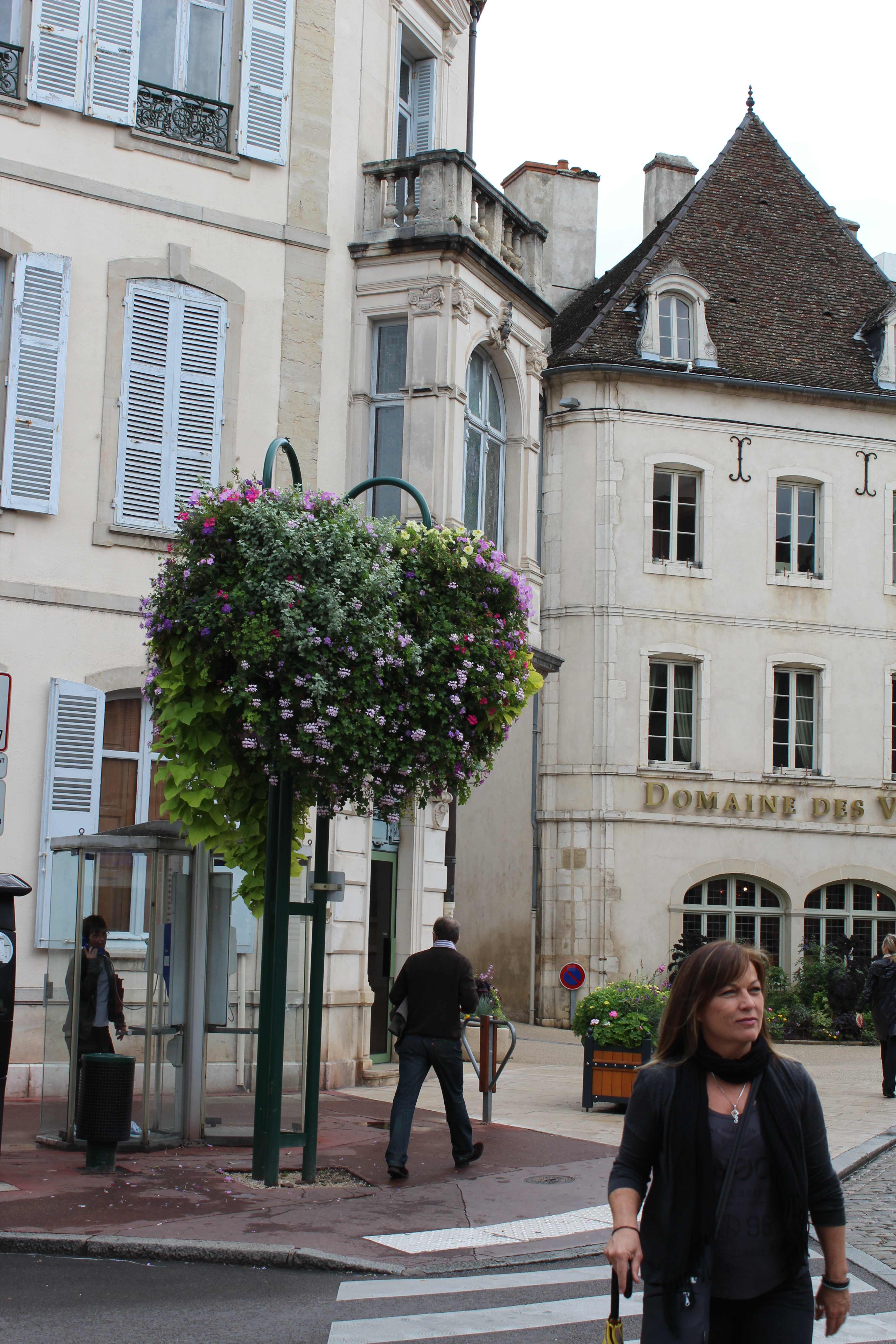
Strolling through Beaune.                  While I still can.

We’ve arrived in Bourgogne (Burgundy to the un-French amongst us) to stay for a few days in the beautiful and relaxing city of Beaune.

And yes, we’re taking advantage of a little kick-back time before we head off on the last bit of our France trip – five days cycling through the region’s vineyards and villages.

Inevitably, kick-back involves some ‘Aussies in the Mist’ moments, up on the highest point EB can find.

He likes views, apparently.

Bien sur, we also take some time out to unravel the mysteries of the fascinating Côte d’Or wine region.

Copyright: Louise Ralph

Misty heights of Bout de Monde

This takes losing the plot to new levels. We discover that the only grapes grown in the Côte d’Or are pinot noir and chardonnay. That’s not so hard.

It also explains why there are no grape types mentioned on the labels. Instead, the plot of origin, its classification, then the winemaker are featured.

Now it gets more complicated. Much more.

The region is divided into plots, either owned or leased by various winegrowers. There are no houses to be seen amongst the vineyards…

Instead, the vignerons live and make their wine in the villages, and have cellar doors there.

The result is sweeping vineyards stretching up the hillsides and into the valleys, punctuated by picturesque stone villages.

Copyright: Louise RalphVineyard plots are classified into regional, village, premier cru and grand cru – all based on the plot’s microclimate and orientation to the sun, and the mosaic of limestone and soil.

You can get a reasonable wine for €10, while grand cru could set you back €2000 a bottle.

In the late 1800s and early 1900s, some vignerons with marketing-smarts came up with the idea of renaming villages to include their best wine label. This explains the many double-barrel (no pun intended) village names, like Nuit-St-Georges or Chambolle-Musigny. So romantic. So French.

Back to the plot. The surprising thing is that one plot will produce a particular taste in the wine while, just two metres away across the track, another plot will produce an entirely different flavour.

This is part of the adventure of Burgundy wines and something the locals embrace with particular pride.

Wine here isn’t a beverage, it’s an artform – and learning by doing isn’t a bad way to pass the time.

A week in Provence

And so it begins…

We were on a wine tour in Provence today, and EB had just bought some wine. Mid-chat with someone, he’d walked away leaving (I thought) €14 change behind.

Our lovely English-speaking French guide was standing nearby and, to be sure I wasn’t taking someone’s money by mistake, I asked him:

“Is that Frank’s or yours?”

Say that out loud, with a bit of a French accent, and you’ll know what’s coming next…

“It’s euros. We don’t have francs here anymore,” he replied.

I smiled. “Oh, no,” I said. “I mean, is that Frank’s change?”

Bien sur, we change many years ago.”

“Ah, oui,” I said, shrugging in that very-French way I’m learning.

But behind us, one of the other Australian ladies on our tour was looking confused. “Who’s Frank? Are you Frank?” she said to him.

“No, he’s Jacques,” I said.

“Then who’s Frank?”

But some things you just can’t explain…

So, apart from practicing French with the tour guide, I learnt that France is very prescriptive when it comes to viticulture.

Appellations mean that each region can only use certain grapes in their wine making and often at particular percentages. 

This is pretty handy to know, and explains why the labels clearly identify the region, but often don’t mention the grape variety.

It also explains why a waiter looked at me oddly the other day when I asked for un verre du vin blanc, s’il vous plait. Sauvignon?

“Sauvignon? Non. Bergerac.” he said, which I had a vague idea was a region…

Oui très bien seemed the appropriate answer.  At €2.50 a glass, I wasn’t about to argue.

At least I know what I’m ordering when I see a wine from Provence… I think. We may have worked out the whole wine thing by the time we leave, but I doubt it.

Oh well…When it comes to French wines, ignorance still ends up being bliss. Bonne journée!


From chateaux to wine caves…

As we drove into the Loire Valley yesterday, we were stunned to see the lavish chateaux everywhere. We expected vineyards and quaint villages. Instead, these ‘getaway lodges’ for the rich and powerful litter the countryside.

You could spend days here visiting chateaux, and some people do. We popped into Chambord Chateau for a look around…

Copyright: Louise Ralph

Chambord Château: just a humble hunting lodge really.

Chambord’s tricky staircase… and EB playing Where’s Wally (aka Where’s Poppy Frank)

Set on a mere 13,000 acres of forested parklands, complete with rutting stags and more, the chateau has enormous fireplaces in every room – but it still looks like a drafty, uninviting old place to stay in.

Which is probably why King Francois I didn’t spend much time there after it was built.

Chambord’s double helix staircase was brilliant. Two open parallel flights of stairs are wrapped around a hollow core.

So EB and I could enter the staircase on the same floor, but from opposite sides, and we could see each other walking up and down…but we’d never cross paths. Spooky.

Copyright: Louise Ralph

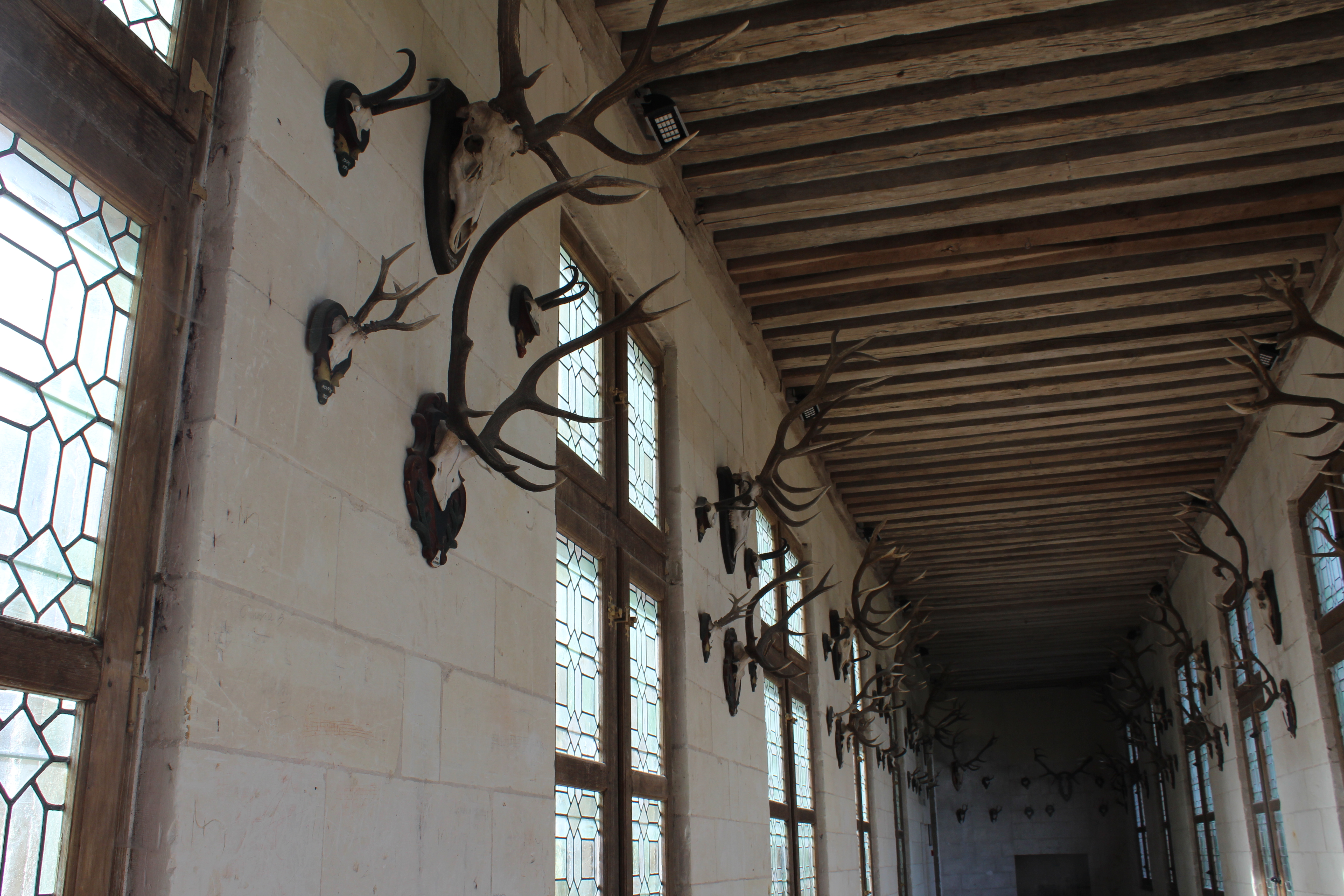
That one’s going straight to the pool room, Henry.

And then there’s the pool room… I mean, trophy hall.

These (pictured) are just a few of the ‘decor peices’ hanging around the chateau.

This is probably the best-known chateau in the region, but there are better – or so we’re told.

One chateau was enough for us, and all those stairs had worked up a thirst…

But finding cellar doors that are open on a Thursday afternoon – that’s the real adventure.

We finally came across the Cave des Productuers de Vouvray, and took the tour to find out about the methode traditional and (of course) try the fabulous final product.

Hmmm, chateaux or caves? We are definitely bats…

PS: We’re staying in a chateau ourselves for a few days – Chateau les Muids. But this one is way smaller and only has one deer head on the wall. Phew…